Marriage coaches, authors, and speakers helping over 20 million couples every month.

Meet The Freemans
MSc
In Psychology
20 Million+
Couples reached every month
90,000+
Couples through their programs
3,000+
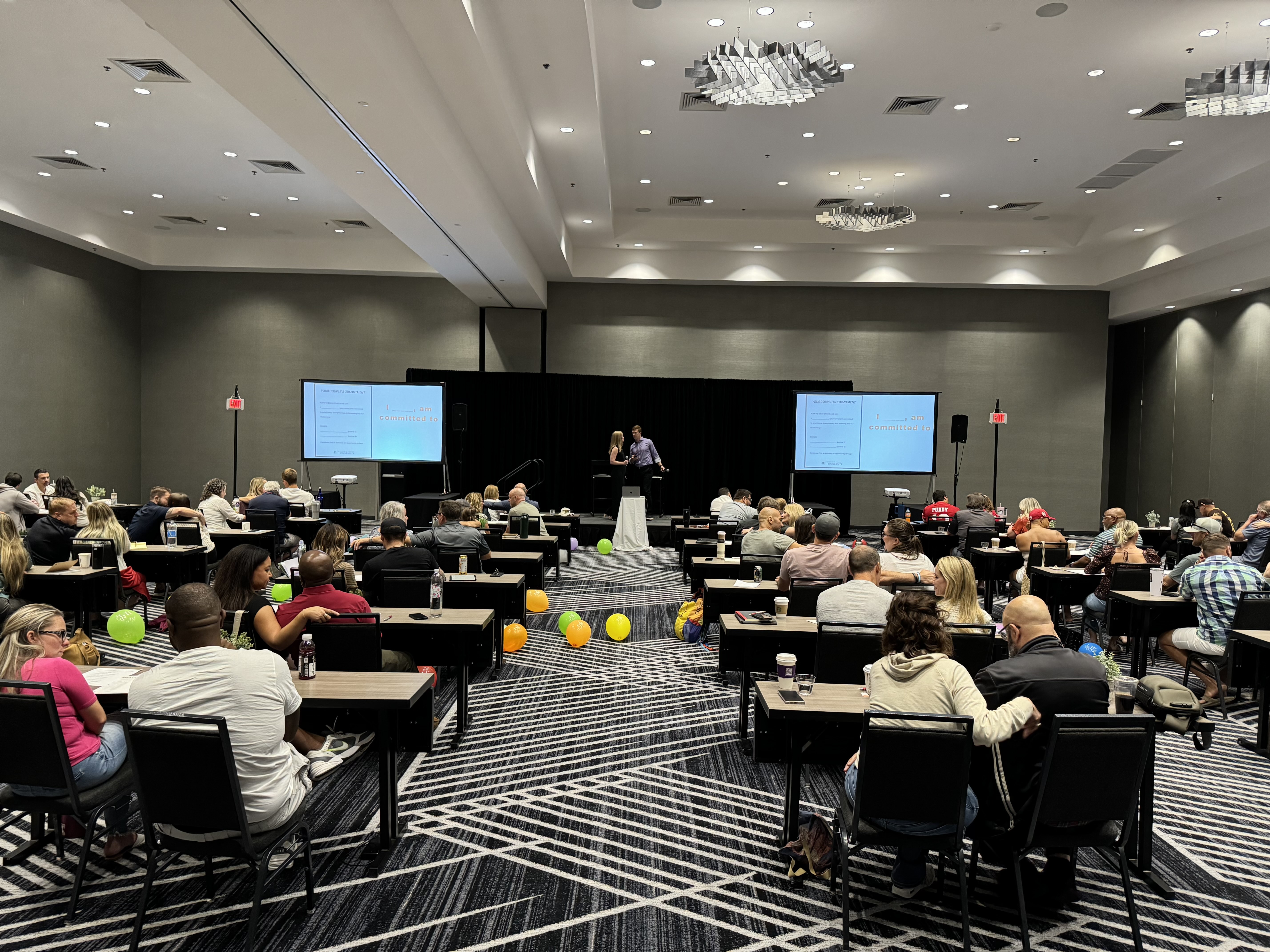
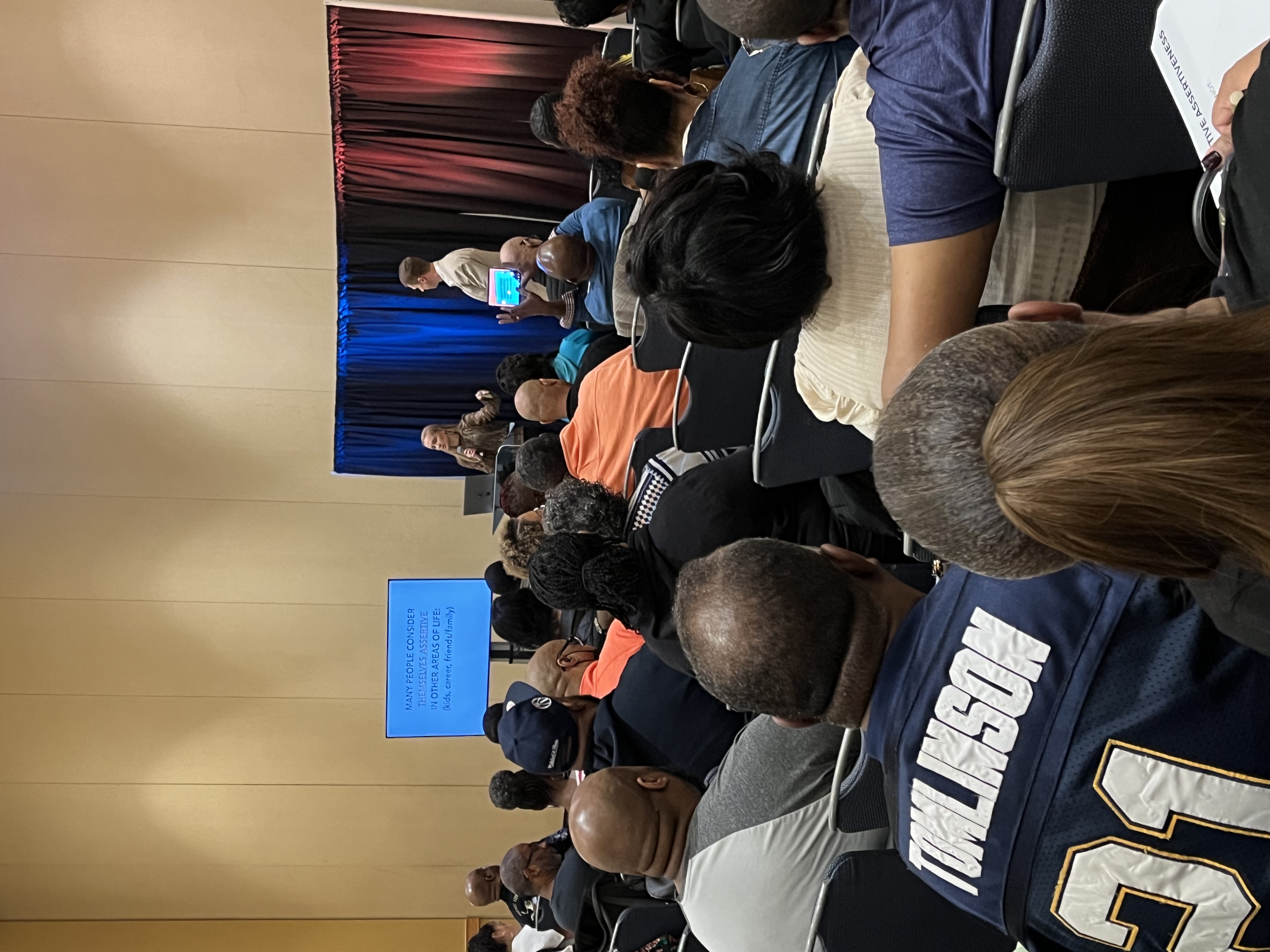
Couples coached at live workshops

Professional Bio

Jocelyn and Aaron Freeman are the husband-and-wife duo behind marriage content that reaches 20 million+ couples every month. As internationally recognized marriage coaches, they both hold Master's Degrees in Psychology and have spent the last decade guiding couples to build stronger, more connected partnerships.

They've sold out over 60 in-person Couples Workshops across the U.S., worked with celebrity couples and public figures, and developed viral marriage resources used by tens of thousands of couples around the world. Their podcast ranks in the top 20 relationship podcasts on iTunes.

Jocelyn and Aaron Freeman

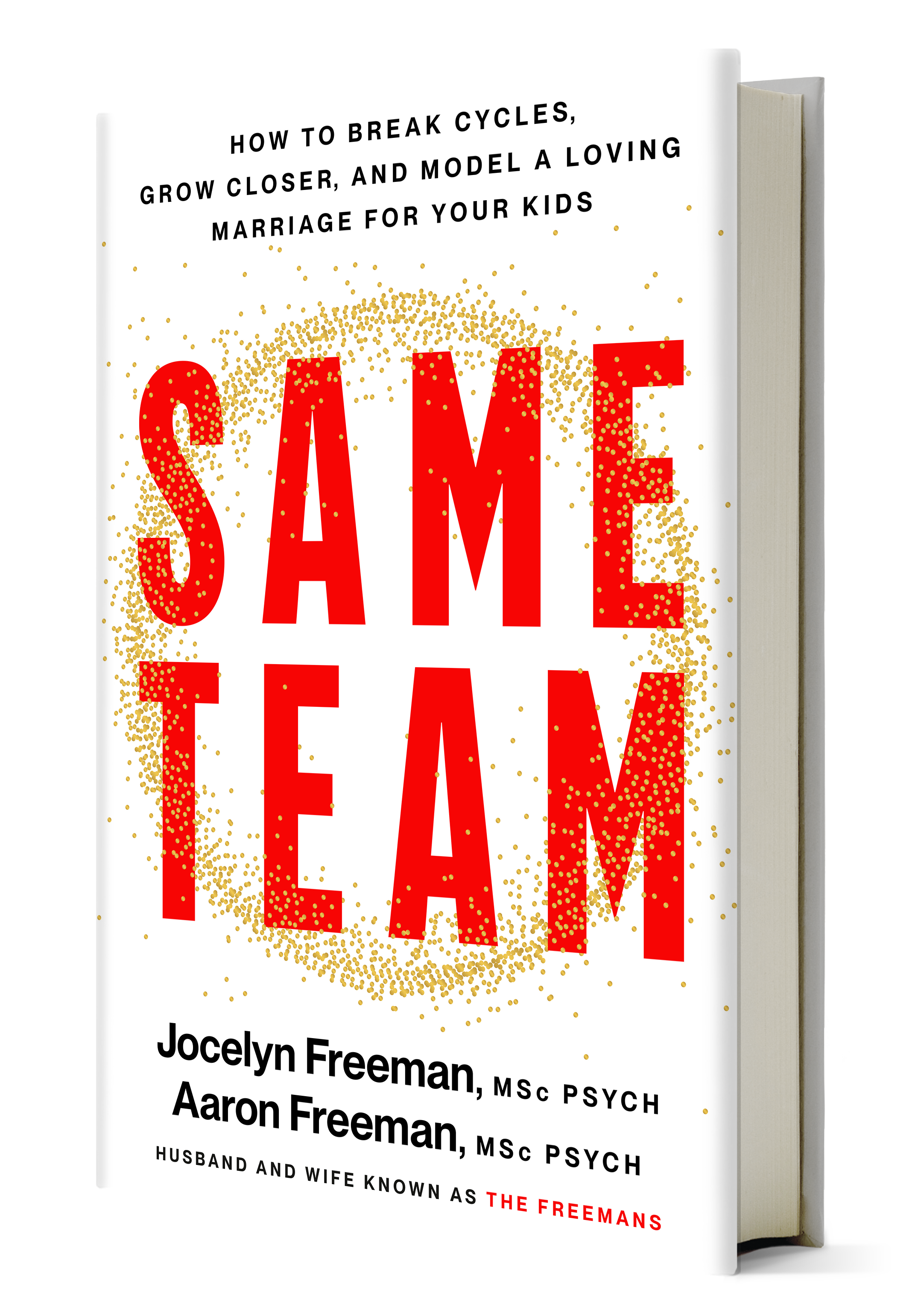
The Freemans are regularly featured in national media, have shared stages with leaders like Tony Robbins, and most recently signed a book deal with Penguin Random House for their upcoming book Same Team, to be released January 2027.

The Freemans are currently booking speaking engagements and guest interviews for 2026. Reach out to bring them to your show or stage.


The Mission

Their mission is clear: to provide couples with the skills and tools to navigate both the happy and the hard seasons of marriage, lower the divorce rate, and model healthy love for the next generation.

They believe the health of a marriage doesn't just impact the couple. It shapes the children watching, the family that forms around it, and the generation that comes after.

Where it all started

Jocelyn and Aaron Freeman early photo

Early in their relationship, Jocelyn and Aaron realized that although they had a lot of love for each other and a lot of alignment in where they wanted to go, their patterns could have torn them apart.

Jocelyn grew up in a home where intense, frequent conflict eventually led to a divorce that shattered her family and the world she knew as a child. She carried a lot of those patterns into her relationships, along with a deep lack of security and no real blueprint for what a healthy relationship was supposed to look like.

Aaron grew up in a home with steady, loving parents. But although there was no unhealthy conflict, he also never saw his parents name their feelings, work through a difficult conversation, or repair after a hard moment. Uncomfortable emotions were avoided at all costs. So when tension showed up in his own relationship, he had no idea how to engage with it. You can see how those two people, coming together, could have a hard time. Does any of that sound familiar?

But here's what made the difference: they were both willing to look at their own part of the equation. Both had a growth mindset. Both chose to do the work. And over time, they built something genuinely strong, secure, and grounded in real skills.

"Same Team isn't a slogan. It's a decision two people make, over and over, about how they're going to face what's in front of them."

Where Same Team really came from

Jocelyn and Aaron family photo Jocelyn and Aaron workshop photo

By the time their first child arrived, Jocelyn and Aaron had already built quite a business together. Years of coaching couples, selling out workshops, growing a podcast, writing their second book. They had a strong foundation, in their work and in their marriage.

But nothing could have fully prepared them for how much everything would change when they became parents. In 2021 and 2022, with a newborn at home, they went through one of the hardest seasons of their lives. Becoming parents alone reorganizes everything — your identity, your relationship, your sense of self. But on top of that transition, several major investments fell apart at once. Aaron found himself outside doing manual labor, physically trying to rescue a multifamily investment that was supposed to be part of their financial future. They were down to their last dollars, genuinely uncertain about what was going to happen, afraid for their family, their foundation, and at moments, where they were even going to live.

At the same time, Jocelyn was navigating one of the hardest seasons of her own life. A birth that hadn't gone as planned. A body and identity that felt unfamiliar. A painful family situation that resurfaced old wounds and moved into their home on top of everything else. Have you ever been in a season where everything hits at once and you can feel it pulling you and your partner in opposite directions?

That was this. And it would have broken a lot of couples. Instead, Jocelyn and Aaron kept coming back to the same decision: we are on the same team. Not because it was easy. Because they chose it, over and over again. It was in the middle of that season that their content went viral. Their following grew from 10,000 to over a million. They built it because they kept choosing each other through it.

Have you seen the news? You can now preorder our new book Same Team. How to break cycles, grow closer, and model a loving marriage for your kids.

Preorder now
Preorder now and get two bonus guides plus an entry to win a romantic couples getaway in Scottsdale, Arizona.
Published by Penguin Random House, January 2027. Available everywhere books are sold.
Same Team by Jocelyn and Aaron Freeman
Now available for preorder

The phrase that held them together. Now a movement.

Same Team is the phrase that held them together through that season, and it now sits at the center of everything they do. Their content, coaching programs, keynotes, and workshops all come back to this single idea. It's not a slogan. It's a decision two people make, over and over, about how they're going to face what's in front of them.

Their book Same Team, published by Penguin Random House, releases January 2027. It draws on everything they've learned, taught, and lived: how couples break old cycles, stay connected while raising kids, and build a marriage worth modeling. This isn't just a book about having a better relationship. It's about creating a legacy. Changing how families operate, not just for the couple reading it, but for the generation watching them.

Their vision for this book is big. They want it in the hands of as many couples and families as possible, and they would love your support in making that happen.

Why people trust them

Jocelyn and Aaron Freeman photo 1 Jocelyn and Aaron Freeman photo 2 Jocelyn and Aaron Freeman photo 3

Because of everything they've been through personally, Jocelyn and Aaron have an insider's look at what is really going on for couples behind closed doors. And that's a big part of why they've become two of the most trusted voices in the relationship space.

It goes beyond their master's degrees in psychology. What keeps people coming back is that what they teach actually works. The frameworks are practical, the tools are immediately usable, and the results are real. They've reached 20M+ couples every month, coached 60K+ couples through their programs, sold out 60+ workshops across the U.S., and their podcast ranks in the top 20 on iTunes.

Their reach extends well beyond the screen. They are regularly sought out to speak at mastermind groups, corporate events, churches, and retreats. When people want real answers about what's happening in their relationship and what to do about it, they find their way to the Freemans.

  • The Ed Mylett Show
  • Modern Wisdom — Chris Williamson
  • Couple Things — Shawn Johnson & Andrew East
  • Before During and After Baby — Katherine Schwarzenegger
  • Earn Your Happy — Lori Harder
  • Fox 11  ·  AZ-TV Morning Show  ·  National Media
  • More media and podcast interviews coming soon

That's the legacy.

At the end of the day, Jocelyn and Aaron are doing this because they know what it feels like to be in the middle of something hard and wonder if you're going to make it through together. They've lived it. And what carried them through is the same thing they've spent their careers teaching.

That's what they want for every couple they reach. A partnership that can weather the hard seasons, grow closer through them, and give the next generation something worth repeating.

And it's only getting started.
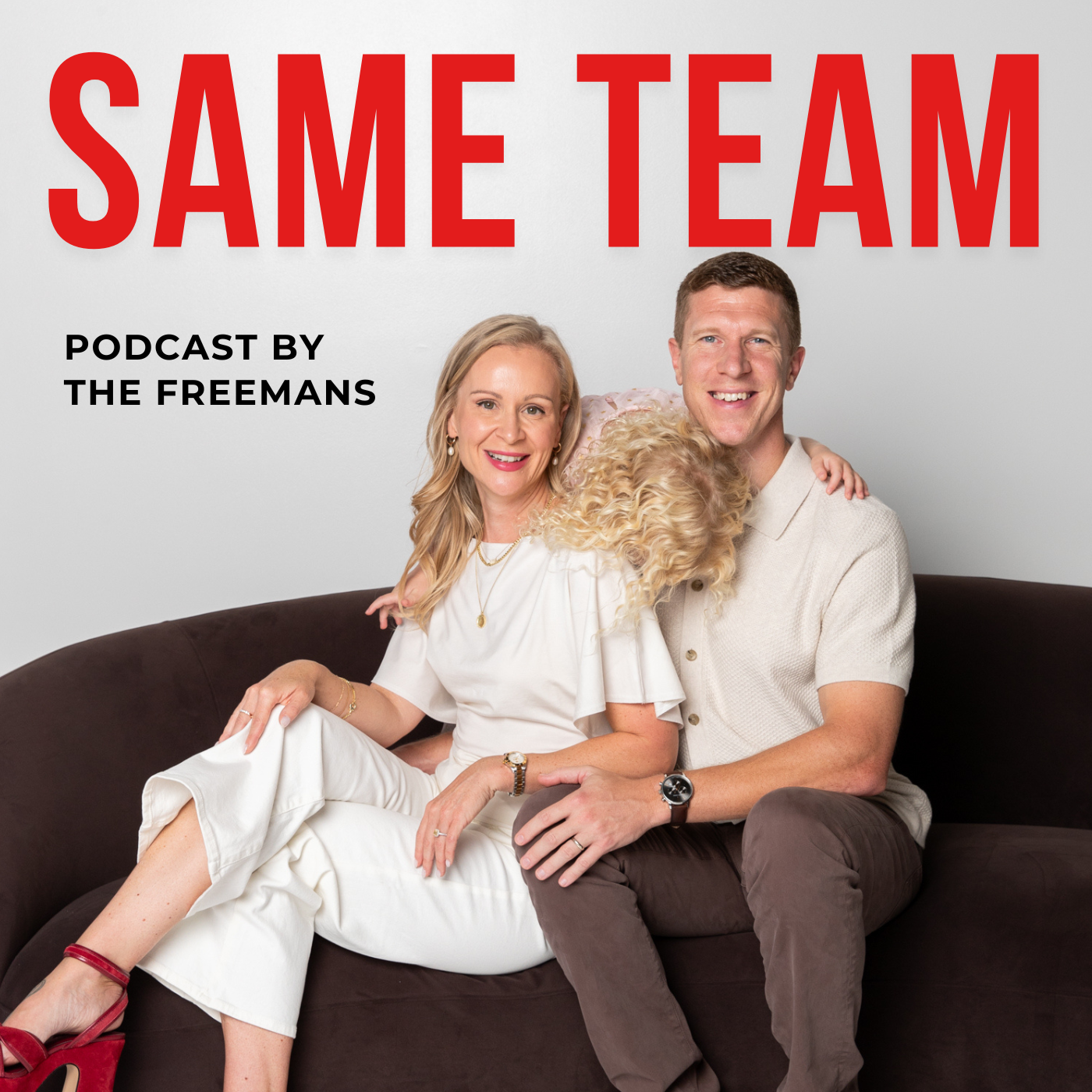
Same Team podcast by The Freemans

Same Team: the podcast to help you become the best partner, parent, and person you can be

Formerly Empowered Couples
Hear topics for your relationship like:

Ending defensive behavior

Fully repair after a conflict

4 keys to emotional intimacy

How to improve your apology

Communication personality differences

The same argument repeats because the conversation ends before the underlying issue gets resolved. The Freemans call this the IOU Cycle: an Incident triggers an Overreaction, the couple tries to Undo it, and the original issue returns unchanged. The argument is the symptom, not the problem. To break the cycle, name the specific unresolved need underneath the fight, then debrief after both partners have calmed down rather than reconnecting and moving on. Reconnection without a debrief is what sends the same argument back around.

Shutting down is a response to emotional overwhelm, not indifference. When someone hits their capacity mid-conversation, the brain's stress response overrides clear thinking, so what looks like stonewalling is usually a system that has maxed out. The partner who withdraws is not refusing to engage, they are out of capacity to engage well. The fix is de-escalate now, debrief later: step away before either partner hits that threshold, agree on a specific time to return, and come back when both people can think instead of react.

Raise it while it is still small, and lead with the need rather than the complaint. The Freemans teach this as Seeds vs Weeds: a concern raised early is a seed and takes a short conversation, while the same concern left sitting for days becomes a weed and takes a much harder one. Most couples wait until they are already frustrated, which means the conversation starts at a level of intensity the topic never required. Time it earlier than feels necessary and the tone takes care of itself.

Money fights are rarely about the number, they are about what the spending represents. For one partner a purchase means safety or freedom, and for the other the same purchase is evidence they did not get a say. That is why budget conversations resolve the logistics and leave the conflict intact. Before discussing what to do, have each partner say out loud what money represents to them and what they are protecting. Couples who do this find they were never actually arguing about the same thing.

Trust rebuilds through repeated visible evidence over time, not through one conversation that settles it. The partner who broke it almost always wants to move forward faster than the partner rebuilding it, and that gap becomes its own recurring conflict. What works is consistency the other person can actually observe, plus a willingness to answer the same question again without defensiveness, however many times it gets asked. The Rebuilding Us challenge gives couples in this season a structured thirty days to do that.

Decide in advance instead of in the moment. Most parenting conflict is two people raised differently, each defaulting to what they knew, who have never agreed out loud on what they are building together. Disagreeing in front of the kids turns a parenting difference into a loyalty problem, which is why the argument escalates past the actual rule being debated. Agree on your shared family values first, then decide from those rather than relitigating each situation as it arrives. The family meeting guide gives you a format for that conversation.

Build a deliberate transition between work and home, because the damage is rarely the hours themselves. Work is the most common pressure couples name, and the real cost is that the marriage receives whatever attention is left after everything else has taken its share. Your partner is not competing with your job, they are competing with your depleted capacity at the end of it. Couples who protect this well do not work less, they mark a clear end to the workday so their partner is not getting the leftovers by default.

Check whether you and your partner are measuring effort the same way before concluding they are not trying. The Freemans describe this as an imbalance in the Love Account, where one partner is depositing more than the other, or where both are depositing in a currency the other does not register. A partner showing up through acts of service while the other needs words of affirmation looks one-sided even when both people are working at it. Tell your partner specifically what registers as love to you, rather than waiting for them to deduce it.

Pause before either of you is reactive, not after. Escalation happens when a conversation continues past the point where either partner can think clearly, and each defense raises the intensity for the next exchange. The pause that breaks that chain has to come early, which is the opposite of most couples' instinct to push through until it is resolved. De-escalate now, debrief later is the pattern, and the step most couples skip is the return. Without a scheduled debrief, the pause becomes avoidance and the issue resurfaces unchanged.

Yes, and it is one of the most common patterns in long-term marriage. The Freemans describe three states of marriage, Dysfunction, Function, and Connection, and roommate season is Function: you have gotten good at managing logistics and stopped investing in each other as partners. The connection did not disappear, it went dormant under calendars, kids, and coordination. Moving from Function to Connection requires acting connected before you feel connected, because the feeling follows the behavior rather than leading it.

It is extremely common, and it is fixable, but it usually starts with emotional repair rather than physical connection. Intimacy does not fade because couples stop loving each other, it erodes when unresolved conflict accumulates and emotional safety drops. It is difficult to feel open with someone you are still quietly holding something against. Work through what has gone unrepaired first, because for most couples the physical closeness returns on its own once the emotional distance closes.

One partner is usually explaining their experience while the other is simultaneously building their defense. Most couples do not have a listening problem, they have a taking-turns problem. Real understanding requires setting your own perspective aside temporarily, not to agree, but to track what your partner is actually saying before you respond. The Same Team mindset changes what both people are listening for, shifting the goal from winning the exchange to solving the problem as teammates rather than opponents.

Counseling surfaces patterns but does not always install the skills to break them. Understanding why you argue is a different capability from knowing what to do differently the moment an argument starts. Many couples can describe their cycle precisely and still repeat it, because insight is not a tool you can reach for mid-conversation. What changes the outcome is skills-based practice, which is what the Marriage Reset is built around: specific tools you rehearse until they are available under stress.

Love does not come with the skill to communicate well under stress, and those are separate things. Most couples hurt each other from running old conflict patterns learned in childhood, in past relationships, or over years of a dynamic nobody corrected, not from any intent to wound. The cycle feels impossible to break from inside it, particularly when both people are genuinely trying and still landing in the same place. The love is already there, the tools are the missing piece, and tools are learnable.

The signal is repetition without resolution, not the presence of conflict. Every marriage has friction, and friction alone means nothing. What matters is whether the same patterns cycle back unchanged, whether emotional distance is growing rather than fluctuating, and whether you have lost confidence that things can be different. Most couples can feel the difference between a hard season and a pattern setting into something permanent. If it is starting to feel permanent, that is the point to address it, and every month earlier makes it meaningfully easier.